At Riverview, we believe it’s important for students to gain knowledge and master skills, but we also recognize that students need to make connections between their learning and the real world.



Structure, coherence, and continuity
Riverview has developed a creative curriculum framework that provides structure, coherence and continuity for learners in Kindergarten through 8th grade.
Big ideas connect our curriculum at each grade
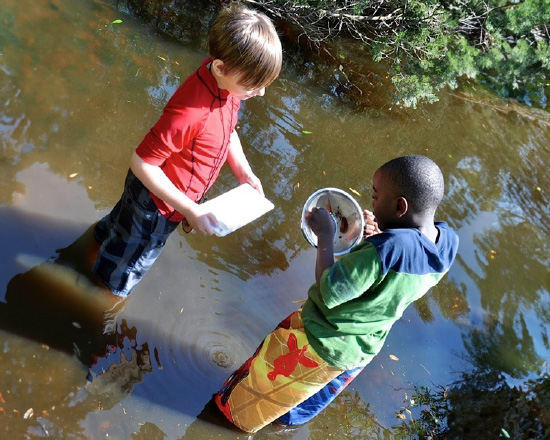
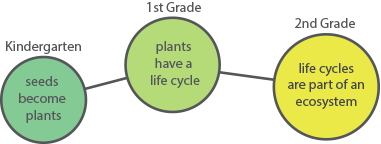
At each grade level, students are required to meet proficiency in state mandated standards that are heavily focused on skills and content. To enrich the curriculum, Riverview teachers write integrated units of study centered around Big Ideas to help students see that life is not arranged by content areas – that it’s interconnected. For example, the Big Ideas in the K-2 cycle are Beginnings, Cycles and Patterns, and Systems. Kindergarten students learn how seeds grow into plants, in first grade, students discover that seeds are a part of a life cycle, and in 2nd grade they explore this concept further by experimenting with how the life cycle of a plant fits in to a larger eco-system. We call this Connecting the Dots. Students are encouraged to apply what they learn in each grade level to the next grade level, to make meaning, build connections, and apply their learning to the real world.
Grades are grouped into three cycles with connecting concepts
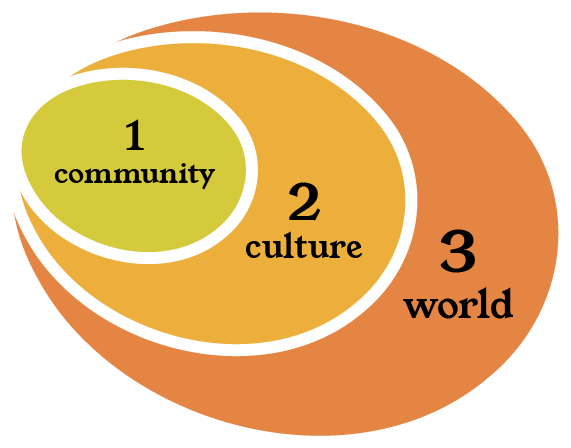
To further help our students Connect the Dots, Riverview students embark on a nine year journey that is comprised of three cycles. Each cycle, K-2, 3-5, and 6-8 is guided by a connecting concepts that link the curriculum with the development of the child– the child as an individual in an expanding social network—community, culture, and world.

At the End of Each Cycle, Students Engage in Capstone Experiences
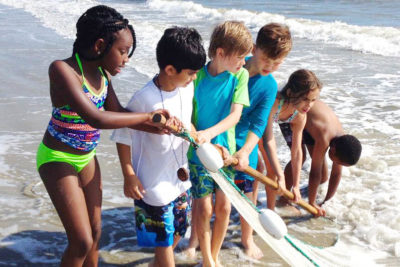
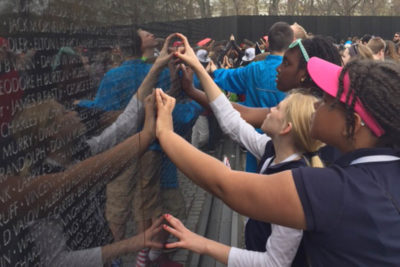
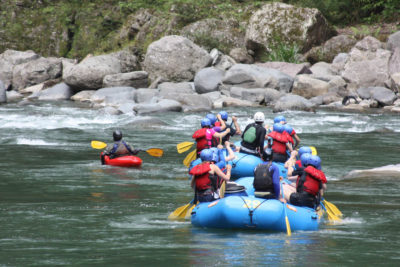
Part of Riverview’s larger vision for students is to provide field experiences that extend the walls of learning beyond the classroom. In addition to the common threads, each cycle culminates in Capstone Field Experiences and projects at the end of Second, Fifth, and Eighth Grade. The field experiences are designed to allow students and teachers to use place-based learning to enrich the curriculum and engage students in real world, authentic experiences. These field experiences will build off of the Big Ideas explored in each grade level and the Conceptual themes of Community, Culture, and World. Students will participate in fundraising for their capstone field trips, and each trip will be presented as a celebratory culmination of the students’ growth throughout the cycle of three years.